Saturday, 23 January 2016

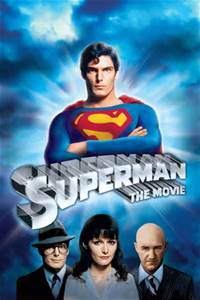
Superman: The Movie

We are watching the first five Superman films on dvd.

In the first film:

(i) Luthor is still a criminal mastermind with a secret hideout, not a corrupt billionaire with an L-shaped skyscraper. At the end, he goes to prison, not back to his penthouse.

(ii) The Kents are still elderly when they find Clark. Jonathan dies before Clark begins his costumed identity.

(iii) The costume and the "S" symbol are Kryptonian in origin, not designed by Martha. The "S" and "Superman" are a coincidence.

(iv) Several absurdities must be accepted for their period charm but should not be repeated in later films. The absurdities are not as obtrusive as I had feared.

(v) We instantly recognize Supes, Kent, Lane and Luthor in the poster. Kent looks dated with his hat.

(vi) This is the beginning of Luthor's interest in real estate.

Tuesday, 29 December 2015

Two Happy Returns

Today at First Age Comics in Lancaster, I learned of two "sudden and most strange returns" (to quote Hamlet):

after a Cosmic Convergence, the Superman of the (post-Crisis) DCU has been left stranded on the Earth of the (current) New 52;

Lucifer Morningstar has returned to Earth from the inter-cosmic Void.

Although DC superhero continuities make no sense, Lucifer's return could mean either Nothing or Something Big. Comic narratives of lasting value include the fantasy tetralogy:

Swamp Thing
John Constantine: Hellblazer
The Sandman
Lucifer

Will this new Lucifer monthly comic continue that legacy or not? How many fans will buy the monthly comic and how many will instead wait for it to be collected? - a practice that started with Watchmen but has since become standard.

The legacy of the Awesome Mage continues. He wrote Watchmen, the last Superman of Earth 1 story and The Killing Joke and his reconstruction of the Swamp Thing kick-started that fantasy tetralogy.

Saturday, 12 December 2015

Miracleman And The Prisoner

I compared V For Vendetta and The Prisoner here and here.

In The Prisoner episode, "A, B and C," No 2 observes No 6's dreams on a screen and manipulates the dreams. This is like the para-reality programming. In the episode, "Do Not Forsake Me, Oh My Darling," the Village puts No 6's mind into another body.

In Neil Gaiman's Miracleman, the Qys (alien) called "Mors" (Latin for "death") asks Warhol no 6 to befriend Gargunza no 6 who is a prisoner but tries to escape after six months - also after Mors has given him a pomegranate, a mythological reference.

Also, former spies are subjected to para-reality programming and confined in "the City," of which Evelyn Cream says that he is its Number One. When No 1860 is allowed out into the real world, she wonders whether there is a realer world beyond it and feels that she is still being watched, just as No 6 realizes that he is not free from his enemies even when he is back in London.

Wednesday, 9 December 2015

Correcting The Previous Post

See here and the comment.

The first cinematic Wonder Woman meets the second cinematic Superman and the third cinematic Batman. That's what I thought before I was misled by thinking of a Wonder Woman TV film as a cinematic film.

I said that 10 films formed a continuity:

5 Superman;
1 Supergirl;
4 Batman.

However, the 5th Superman film follows the 2nd Superman film disregarding the 3rd and 4th Superman films so there is a split in continuity here. I think.

Tuesday, 8 December 2015

DC Cinematic Continuities

When I say "cinematic," I mean original feature films, not either cinema serials or a feature film based on a TV series.

This is a "correct me if I am wrong" situation, especially since I have not checked every detail.

In Batman v. Superman: Dawn Of Justice, the second cinematic Superman meets the second cinematic Wonder Woman and the third cinematic Batman:

the first cinematic Superman had a tetralogy;
the second cinematic Superman is appearing for the second time;

the first cinematic Wonder Woman had a single feature film;
the second cinematic Wonder Woman is appearing for the first time;

the first cinematic Batman had a tetralogy;
the second cinematic Batman had a trilogy;
the third cinematic Batman is appearing for the first time.

The Robin of the Batman tetralogy referred to a Metropolis. That must have been the Metropolis of the Superman tetralogy.

The first Batman referred to a Superman. That must have been the first Superman.

The Supergirl feature film referred to the first Superman.

Thus, nine films formed a cinematic continuity.

Thursday, 3 December 2015

Batman v Superman

The trailer looks really good:

the Superman from the recent film;
Kent interviewing Wayne;
Olsen (?) introducing them;
the Bat costume recognizable from previous films;
likewise the Batmobile;
conflict between the costumed identities;
a line from Frank Miller;
Diana showing up;
the Big Three - the start of the Justice League.

They know how to do it nowadays. What's not to like?

Friday, 27 November 2015

What THE KILLING JOKE Is Really About

"...Watchmen was something to do with power, V for Vendetta was about fascism and anarchy, The Killing Joke was just about Batman and the Joker - and Batman and the Joker are not really symbols of anything that are real, in the real world, they're just two comic book characters."
-Alan Moore, quoted in Gary Spencer Millidge, Alan Moore Storyteller (Lewes, East Sussex, 2011), p. 139.

I rarely disagree with the Awesome Mage but this is one occasion. The Killing Joke is about whether one bad day is enough to drive anyone mad. It happened to the Batman. It happened to the Joker. The Joker tries to make it happen to Jim Gordon - and fails.

Would one very bad day be enough to drive you or me mad? A very important question.

Addendum, 29 Nov 2015: I have addressed this issue before. See here.