Absurdities:
people speaking in a vacuum;
no time lag for Earth-Moon radio contact;
Kryptonese heard as English;
coincidences on a cosmic scale;
never-before-heard-of Kryptonian powers;
a kiss inducing selective amnesia;
no explanation of the terrorists' demands.
Comments:
we recognize characters and settings from the previous film, thus establishing that we are watching a series;
the Zod Squad are not seen again in this series;
the first installment of the second Superman film series ends with Supes killing Zod;
this film ad shows them fighting above New York.
Showing posts with label Superman. Show all posts
Saturday, 5 March 2016
Sunday, 24 January 2016
Superman: The Movie (More)
(vii) It is good to start with the Zod Squad, knowing that they will return.
(viii) Rao is red. Right.
(viii) The legend of Superman shines through any new version of the story.
(ix) Three actors for Supes, corresponding to Superbaby, Superboy and Superman. So it is not just Christopher Reeve. The teenage Clark is good - a forerunner of Smallville.
(x) The Fortress of Solitude is not built by Kal-El but grown from a Kryptonian crystal.
(xi) Luthor's sidekicks provide comic relief.
(xii) Starting with a comic book specially written for the film was a good idea.
(viii) Rao is red. Right.
(viii) The legend of Superman shines through any new version of the story.
(ix) Three actors for Supes, corresponding to Superbaby, Superboy and Superman. So it is not just Christopher Reeve. The teenage Clark is good - a forerunner of Smallville.
(x) The Fortress of Solitude is not built by Kal-El but grown from a Kryptonian crystal.
(xi) Luthor's sidekicks provide comic relief.
(xii) Starting with a comic book specially written for the film was a good idea.
Saturday, 23 January 2016
Superman: The Movie
We are watching the first five Superman films on dvd.
In the first film:
(i) Luthor is still a criminal mastermind with a secret hideout, not a corrupt billionaire with an L-shaped skyscraper. At the end, he goes to prison, not back to his penthouse.
(ii) The Kents are still elderly when they find Clark. Jonathan dies before Clark begins his costumed identity.
(iii) The costume and the "S" symbol are Kryptonian in origin, not designed by Martha. The "S" and "Superman" are a coincidence.
(iv) Several absurdities must be accepted for their period charm but should not be repeated in later films. The absurdities are not as obtrusive as I had feared.
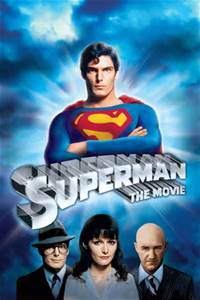
(v) We instantly recognize Supes, Kent, Lane and Luthor in the poster. Kent looks dated with his hat.
(vi) This is the beginning of Luthor's interest in real estate.
In the first film:
(i) Luthor is still a criminal mastermind with a secret hideout, not a corrupt billionaire with an L-shaped skyscraper. At the end, he goes to prison, not back to his penthouse.
(ii) The Kents are still elderly when they find Clark. Jonathan dies before Clark begins his costumed identity.
(iii) The costume and the "S" symbol are Kryptonian in origin, not designed by Martha. The "S" and "Superman" are a coincidence.
(iv) Several absurdities must be accepted for their period charm but should not be repeated in later films. The absurdities are not as obtrusive as I had feared.
(v) We instantly recognize Supes, Kent, Lane and Luthor in the poster. Kent looks dated with his hat.
(vi) This is the beginning of Luthor's interest in real estate.
Tuesday, 29 December 2015
Two Happy Returns
Today at First Age Comics in Lancaster, I learned of two "sudden and most strange returns" (to quote Hamlet):
after a Cosmic Convergence, the Superman of the (post-Crisis) DCU has been left stranded on the Earth of the (current) New 52;
Lucifer Morningstar has returned to Earth from the inter-cosmic Void.
Although DC superhero continuities make no sense, Lucifer's return could mean either Nothing or Something Big. Comic narratives of lasting value include the fantasy tetralogy:
Swamp Thing
John Constantine: Hellblazer
The Sandman
Lucifer
Will this new Lucifer monthly comic continue that legacy or not? How many fans will buy the monthly comic and how many will instead wait for it to be collected? - a practice that started with Watchmen but has since become standard.
The legacy of the Awesome Mage continues. He wrote Watchmen, the last Superman of Earth 1 story and The Killing Joke and his reconstruction of the Swamp Thing kick-started that fantasy tetralogy.
after a Cosmic Convergence, the Superman of the (post-Crisis) DCU has been left stranded on the Earth of the (current) New 52;
Lucifer Morningstar has returned to Earth from the inter-cosmic Void.
Although DC superhero continuities make no sense, Lucifer's return could mean either Nothing or Something Big. Comic narratives of lasting value include the fantasy tetralogy:
Swamp Thing
John Constantine: Hellblazer
The Sandman
Lucifer
Will this new Lucifer monthly comic continue that legacy or not? How many fans will buy the monthly comic and how many will instead wait for it to be collected? - a practice that started with Watchmen but has since become standard.
The legacy of the Awesome Mage continues. He wrote Watchmen, the last Superman of Earth 1 story and The Killing Joke and his reconstruction of the Swamp Thing kick-started that fantasy tetralogy.
Wednesday, 9 December 2015
Correcting The Previous Post
See here and the comment.
The first cinematic Wonder Woman meets the second cinematic Superman and the third cinematic Batman. That's what I thought before I was misled by thinking of a Wonder Woman TV film as a cinematic film.
I said that 10 films formed a continuity:
5 Superman;
1 Supergirl;
4 Batman.
However, the 5th Superman film follows the 2nd Superman film disregarding the 3rd and 4th Superman films so there is a split in continuity here. I think.
The first cinematic Wonder Woman meets the second cinematic Superman and the third cinematic Batman. That's what I thought before I was misled by thinking of a Wonder Woman TV film as a cinematic film.
I said that 10 films formed a continuity:
5 Superman;
1 Supergirl;
4 Batman.
However, the 5th Superman film follows the 2nd Superman film disregarding the 3rd and 4th Superman films so there is a split in continuity here. I think.
Tuesday, 8 December 2015
DC Cinematic Continuities
When I say "cinematic," I mean original feature films, not either cinema serials or a feature film based on a TV series.
This is a "correct me if I am wrong" situation, especially since I have not checked every detail.
In Batman v. Superman: Dawn Of Justice, the second cinematic Superman meets the second cinematic Wonder Woman and the third cinematic Batman:
the first cinematic Superman had a tetralogy;
the second cinematic Superman is appearing for the second time;
the first cinematic Wonder Woman had a single feature film;
the second cinematic Wonder Woman is appearing for the first time;
the first cinematic Batman had a tetralogy;
the second cinematic Batman had a trilogy;
the third cinematic Batman is appearing for the first time.
The Robin of the Batman tetralogy referred to a Metropolis. That must have been the Metropolis of the Superman tetralogy.
The first Batman referred to a Superman. That must have been the first Superman.
The Supergirl feature film referred to the first Superman.
Thus, nine films formed a cinematic continuity.
This is a "correct me if I am wrong" situation, especially since I have not checked every detail.
In Batman v. Superman: Dawn Of Justice, the second cinematic Superman meets the second cinematic Wonder Woman and the third cinematic Batman:
the first cinematic Superman had a tetralogy;
the second cinematic Superman is appearing for the second time;
the first cinematic Wonder Woman had a single feature film;
the second cinematic Wonder Woman is appearing for the first time;
the first cinematic Batman had a tetralogy;
the second cinematic Batman had a trilogy;
the third cinematic Batman is appearing for the first time.
The Robin of the Batman tetralogy referred to a Metropolis. That must have been the Metropolis of the Superman tetralogy.
The first Batman referred to a Superman. That must have been the first Superman.
The Supergirl feature film referred to the first Superman.
Thus, nine films formed a cinematic continuity.
Thursday, 3 December 2015
Batman v Superman
The trailer looks really good:
the Superman from the recent film;
Kent interviewing Wayne;
Olsen (?) introducing them;
the Bat costume recognizable from previous films;
likewise the Batmobile;
conflict between the costumed identities;
a line from Frank Miller;
Diana showing up;
the Big Three - the start of the Justice League.
They know how to do it nowadays. What's not to like?
the Superman from the recent film;
Kent interviewing Wayne;
Olsen (?) introducing them;
the Bat costume recognizable from previous films;
likewise the Batmobile;
conflict between the costumed identities;
a line from Frank Miller;
Diana showing up;
the Big Three - the start of the Justice League.
They know how to do it nowadays. What's not to like?
Saturday, 4 July 2015
Superman In Public Consciousness And Popular Culture
Regular readers might remember that recently I have:
reread Rick Veitch's (sequel to Alan Moore's) Swamp Thing;
been reading for the first time SM Stirling's Conquistador;
been enjoying these texts while also spotting any connections with the works of Poul Anderson.
Our theme for today is references to Superman. In a work of fiction, any reference to Supes implies either that he is a real guy out there somewhere or that the fictional characters share with their readers a popular culture in which this now mythical figure has become a permanent fixture. Veitch gives us the first; the others the second.
Veitch
Swampy goes to Metropolis to kill Lex Luthor who is protected both by his own security system and by Superman. Veitch, like Moore and Gaiman, applies a new insight to an over-familiar character.
Lois Lane: Clark?...Why is it when I'm talking to you, you always seem to be listening to something else?
Lois Lane: There you go again! I start talking and you stare off into space!
Clark Kent: Huh? Oh, uh...Just enjoying the view, Lois. You can see the whole city from up here.
Lois Lane: Yoo hoo! Earth to Clark. Come in, Clark!
-Rick Veitch, Swamp Thing: Infernal Triangles (New York, 2006), pp. 56, 58, 61.
Anderson
See here.
Stirling
"'Brother, with the amount of money RM and M had to throw around, you could bribe Superman'...'Ten million dollars,' the Man says. 'No, no, I am Superman!' Then it's thirty million. 'No, no, I stand for Truth, Justice and the American Way!' So then it's fifty million, and Superman comes back: 'I'll kill anyone you want!...'"
-SM Stirling, Conquistador (New York, 2004), p. 298.
Of course, the real (?) Superman is incorruptible. (In one version, Luthor, formerly the most powerful man in Metropolis, tries but fails to buy Supes as soon as the latter comes on the scene.) But Stirling's character is making a point. Rolfe Mining and Minerals is one of many front organizations for the Commonwealth of New Virginia which has been secretly exploiting another Earth for decades. By any ordinary standards, their funds are unlimited and "Rich enough to bribe even Superman" is a powerful way to say this.
reread Rick Veitch's (sequel to Alan Moore's) Swamp Thing;
been reading for the first time SM Stirling's Conquistador;
been enjoying these texts while also spotting any connections with the works of Poul Anderson.
Our theme for today is references to Superman. In a work of fiction, any reference to Supes implies either that he is a real guy out there somewhere or that the fictional characters share with their readers a popular culture in which this now mythical figure has become a permanent fixture. Veitch gives us the first; the others the second.
Veitch
Swampy goes to Metropolis to kill Lex Luthor who is protected both by his own security system and by Superman. Veitch, like Moore and Gaiman, applies a new insight to an over-familiar character.
Lois Lane: Clark?...Why is it when I'm talking to you, you always seem to be listening to something else?
Lois Lane: There you go again! I start talking and you stare off into space!
Clark Kent: Huh? Oh, uh...Just enjoying the view, Lois. You can see the whole city from up here.
Lois Lane: Yoo hoo! Earth to Clark. Come in, Clark!
-Rick Veitch, Swamp Thing: Infernal Triangles (New York, 2006), pp. 56, 58, 61.
Anderson
See here.
Stirling
"'Brother, with the amount of money RM and M had to throw around, you could bribe Superman'...'Ten million dollars,' the Man says. 'No, no, I am Superman!' Then it's thirty million. 'No, no, I stand for Truth, Justice and the American Way!' So then it's fifty million, and Superman comes back: 'I'll kill anyone you want!...'"
-SM Stirling, Conquistador (New York, 2004), p. 298.
Of course, the real (?) Superman is incorruptible. (In one version, Luthor, formerly the most powerful man in Metropolis, tries but fails to buy Supes as soon as the latter comes on the scene.) But Stirling's character is making a point. Rolfe Mining and Minerals is one of many front organizations for the Commonwealth of New Virginia which has been secretly exploiting another Earth for decades. By any ordinary standards, their funds are unlimited and "Rich enough to bribe even Superman" is a powerful way to say this.
Friday, 20 February 2015
Meteors
Copied from Poul Anderson Appreciation:
(This is another post that begins somewhere else, then returns to Poul Anderson Appreciation.)
Superman began publication as an adult character in 1938 so his spaceship must have come to Earth about 1918, although no one usually associates him with that period. However, in the Smallville TV series, his spaceship arrived in 1989 so why was it not detected as an incoming missile by US radar defense systems? Because this time the small space capsule arrived in a large Kryptonite meteor shower. Did the ship's drive field carry the meteors through hyperspace?
In Poul Anderson's The Star Fox (London, 1968), the space privateers use "...a giant meteorite or small asteroid..." (p. 148) to conceal the descent of a spaceship onto the surface of the planet New Europe. Because of the speed of descent, air impact would destroy the ship:
"Unless she followed exactly behind the meteorite, using its mass for a bumper and heat shield, its flaming tail for a cloak." (p. 149)
Gunnar Heim must steer the ship through its "...narrow slot of partial vacuum..." (ibid), watching the external incandescence and internal instruments, guided by intuition and an unreeling computation of where he ought to be at each moment. This sounds like other dangerous space passages in Anderson's works:
Dominic Flandry around a pulsar;
Nicholas van Rijn around an extinct supernova;
the Tau Zero ship around a new monobloc.
Before this some of Heim's men made an "...epic..." (p. 148) trip around New Europe's moon but it is not stated exactly why. Did they detach the mass that became the meteorite?
(This is another post that begins somewhere else, then returns to Poul Anderson Appreciation.)
Superman began publication as an adult character in 1938 so his spaceship must have come to Earth about 1918, although no one usually associates him with that period. However, in the Smallville TV series, his spaceship arrived in 1989 so why was it not detected as an incoming missile by US radar defense systems? Because this time the small space capsule arrived in a large Kryptonite meteor shower. Did the ship's drive field carry the meteors through hyperspace?
In Poul Anderson's The Star Fox (London, 1968), the space privateers use "...a giant meteorite or small asteroid..." (p. 148) to conceal the descent of a spaceship onto the surface of the planet New Europe. Because of the speed of descent, air impact would destroy the ship:
"Unless she followed exactly behind the meteorite, using its mass for a bumper and heat shield, its flaming tail for a cloak." (p. 149)
Gunnar Heim must steer the ship through its "...narrow slot of partial vacuum..." (ibid), watching the external incandescence and internal instruments, guided by intuition and an unreeling computation of where he ought to be at each moment. This sounds like other dangerous space passages in Anderson's works:
Dominic Flandry around a pulsar;
Nicholas van Rijn around an extinct supernova;
the Tau Zero ship around a new monobloc.
Before this some of Heim's men made an "...epic..." (p. 148) trip around New Europe's moon but it is not stated exactly why. Did they detach the mass that became the meteorite?
Sunday, 1 February 2015
Modesty Blaise And Superman
See here.
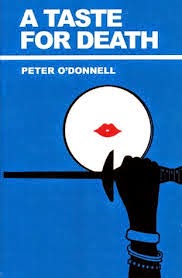
In A Taste For Death (London, 2014), Willie Garvin, handcuffed to a radiator and forced to hold up a bomb that will detonate as soon as he lowers it, wonders whether he can jerk the bomb from the wire to which it is attached and throw it through the shuttered window before it explodes, then thinks:
"Just as well send for Superman." (p. 99)
Here, Superman is clearly a fictitious character although there is no reference to any particular medium.
Later, when Willie claims to be one of only two men who have had sex hanging upside down from a trapeze, Modesty asks:
"'Who was the other bat-man?'" (p. 206)
In A Taste For Death (London, 2014), Willie Garvin, handcuffed to a radiator and forced to hold up a bomb that will detonate as soon as he lowers it, wonders whether he can jerk the bomb from the wire to which it is attached and throw it through the shuttered window before it explodes, then thinks:
"Just as well send for Superman." (p. 99)
Here, Superman is clearly a fictitious character although there is no reference to any particular medium.
Later, when Willie claims to be one of only two men who have had sex hanging upside down from a trapeze, Modesty asks:
"'Who was the other bat-man?'" (p. 206)
Saturday, 1 March 2014
Different Takes On Superman
In Alan Moore's Watchmen, Superman was a fictitious character but comic books changed from superheroes to pirates when there were costumed adventurers in the real world.
In Miracleman, a young boy has seen the first Superman film and we learn that a Captain Marvel comic inspired Emil Gargunza to create the Miracle Family.
In Smallville, Clark Kent will become Superman but, because this TV series was so successful that it ran for ten seasons, many other characters and situations were introduced much earlier than in previous versions of the Superman story.
Watchmen is a single graphic novel whereas Miracleman is an as yet uncompleted comics serial and the Smallville title continues in a comic book sequel to the TV series, even though Clark is by now in Metropolis and has adopted his Superman role. Although Superman has meanwhile returned in a feature film series, I regard Miracleman and Smallville as the two most important conceptual sequels to the original Superman.
In Miracleman, a young boy has seen the first Superman film and we learn that a Captain Marvel comic inspired Emil Gargunza to create the Miracle Family.
In Smallville, Clark Kent will become Superman but, because this TV series was so successful that it ran for ten seasons, many other characters and situations were introduced much earlier than in previous versions of the Superman story.
Watchmen is a single graphic novel whereas Miracleman is an as yet uncompleted comics serial and the Smallville title continues in a comic book sequel to the TV series, even though Clark is by now in Metropolis and has adopted his Superman role. Although Superman has meanwhile returned in a feature film series, I regard Miracleman and Smallville as the two most important conceptual sequels to the original Superman.
Thursday, 23 January 2014
Superman And Smallville
The earliest Superman story was pre-World War II whereas the earliest Smallville TV episode is post-Cold War. Thus, two historical periods have elapsed between Action Comics no 1 and Smallville, Season 1, Episode 1. This Clark Kent can become that Superman only by time traveling, which is certainly not where the narrative is going!
Because of Smallville's contemporary setting, a decommissioned missile silo and a redundant nuclear air raid shelter are used in two of the novels.
Action Comics told us that SUPERMAN was destined to reshape the destiny of a world! (see image) However, every story in the series ends with the world still exactly as it had been before. Such a powerful "superman" would indeed change the world by his mere presence but, for that to happen in a comic strip, we had to wait until Miracleman was published in 1982.
I am currently rereading Miracleman and catching up with Smallville, two different but excellent conceptual sequels to that original Superman story.
Because of Smallville's contemporary setting, a decommissioned missile silo and a redundant nuclear air raid shelter are used in two of the novels.
Action Comics told us that SUPERMAN was destined to reshape the destiny of a world! (see image) However, every story in the series ends with the world still exactly as it had been before. Such a powerful "superman" would indeed change the world by his mere presence but, for that to happen in a comic strip, we had to wait until Miracleman was published in 1982.
I am currently rereading Miracleman and catching up with Smallville, two different but excellent conceptual sequels to that original Superman story.
Jerry Siegel And Mick Anglo
Mick Anglo was to Marvelman what Jerry Siegel was to Superman, the creator of a character later transformed by other writers. There is a difference of scale. MM has had two other writers whereas Superman became an industry:
the multi-media Superman;
superheroes;
Captain Marvel;
Marvelman;
the re-created Marvelman, later renamed Miracleman;
the Smallville TV series that began as a Superman prequel but became a distinct story and also proliferated into other media.
MM and Smallville, both good in different ways, are so dissimilar that it is easy to forget their common origin.
the multi-media Superman;
superheroes;
Captain Marvel;
Marvelman;
the re-created Marvelman, later renamed Miracleman;
the Smallville TV series that began as a Superman prequel but became a distinct story and also proliferated into other media.
MM and Smallville, both good in different ways, are so dissimilar that it is easy to forget their common origin.
Monday, 6 January 2014
Did The Clark Kent Of Earth-2 Grow Up In Smallville?
The Clark Kent of Earth-2 adopted his costumed, crime-fighting identity in adulthood whereas the Clark Kent of Earth-1 had been Superboy in Smallville before he became Superman in Metropolis. Later versions of Kent grew up in Smallville but adopted the superhero identity as adults in Metropolis - except for one TV Clark Kent who grew up in Smallville, then became Superboy at Shuster University, then became Superman in Metropolis.
Thus, later versions synthesize the two earliest versions.
Thesis: Kent becomes Superman in Metropolis;
Antithesis: Kent becomes Superboy in Smallville, then Superman in Metropolis;
Synthesis: Kent grows up in Smallville, then becomes Superman in Metropolis.
The Superboy period, difficult to sustain when Superman is always in the present and Superboy is always ten years behind him, was removed but Smallville as his hometown made sense and was retained. Super(man as a) boy wearing the familiar costume was a first attempt to present the young Kent but later versions, in which his powers develop although they are not yet publicized during his teens, make more sense. In the first two seasons of the Smallville TV series, we see Clark discovering X-ray vision and heat vision - and, in an emergency, flight, although he does not believe it!
My question is: when the Supermen of Earths-2 and -1 met and the latter said that he had grown up in a place called "Smallville," did the former say, "So did I," or "There is no such quaintly named town on Earth-2"?
Thus, later versions synthesize the two earliest versions.
Thesis: Kent becomes Superman in Metropolis;
Antithesis: Kent becomes Superboy in Smallville, then Superman in Metropolis;
Synthesis: Kent grows up in Smallville, then becomes Superman in Metropolis.
The Superboy period, difficult to sustain when Superman is always in the present and Superboy is always ten years behind him, was removed but Smallville as his hometown made sense and was retained. Super(man as a) boy wearing the familiar costume was a first attempt to present the young Kent but later versions, in which his powers develop although they are not yet publicized during his teens, make more sense. In the first two seasons of the Smallville TV series, we see Clark discovering X-ray vision and heat vision - and, in an emergency, flight, although he does not believe it!
My question is: when the Supermen of Earths-2 and -1 met and the latter said that he had grown up in a place called "Smallville," did the former say, "So did I," or "There is no such quaintly named town on Earth-2"?
Wednesday, 28 August 2013
Five Topics
Posts on this blog have been about comics, films, TV episodes, novels and a fancy dress evening. The four last topics were comics related. Smallville novels are based on a TV series based on a comic.
Kick-Ass films are comics related not only because there is a Kick-Ass comic but also because they are about people who have read the comics. Someone said that Ben Affleck who is to play the Batman has already played not Superman but a Superman actor? If so, then the film about the Superman actor was comics related.
There was a comic about a new Superman comics writer so that was a comics related comic. Other potential topics here are animations, cinema serials, radio series and computer games. There is probably more out there that I don't know about.
Kick-Ass films are comics related not only because there is a Kick-Ass comic but also because they are about people who have read the comics. Someone said that Ben Affleck who is to play the Batman has already played not Superman but a Superman actor? If so, then the film about the Superman actor was comics related.
There was a comic about a new Superman comics writer so that was a comics related comic. Other potential topics here are animations, cinema serials, radio series and computer games. There is probably more out there that I don't know about.
Monday, 22 July 2013
DC Superhero Films
DC Superhero Films So Far
a Superman trilogy
3 sequels: 2 Superman films; 1 Supergirl
a Superman reboot
a Batman tetralogy
a Batman trilogy
Green Lantern
+ some lesser known/lower budget productions
Wonder Woman (in her non-super powered period)
2 Swamp Thing films
Steel (a Superman spin-off)
Catwoman (a Batman villainess)
Justice League (post-Crisis team) (I have merely been told about this one)
Next to come is a Superman-Batman team-up in which the rebooted Superman (see above) meets a rebooted Batman. This would have made more sense as a trilogy. After that, I believe that we expect the Justice League which would be Superman, Batman,Wonder Woman, Green Lantern and three others. It would have made more sense if they had each had at least one film first. Marvel is way ahead with its Movieverse.
In the Batman tetralogy (see above), Metropolis is mentioned and Robin appears in the third installment, Superman is mentioned and Batgirl appears in the fourth. It takes a lot longer for everything to happen on the big screen.
a Superman trilogy
3 sequels: 2 Superman films; 1 Supergirl
a Superman reboot
a Batman tetralogy
a Batman trilogy
Green Lantern
+ some lesser known/lower budget productions
Wonder Woman (in her non-super powered period)
2 Swamp Thing films
Steel (a Superman spin-off)
Catwoman (a Batman villainess)
Justice League (post-Crisis team) (I have merely been told about this one)
Next to come is a Superman-Batman team-up in which the rebooted Superman (see above) meets a rebooted Batman. This would have made more sense as a trilogy. After that, I believe that we expect the Justice League which would be Superman, Batman,Wonder Woman, Green Lantern and three others. It would have made more sense if they had each had at least one film first. Marvel is way ahead with its Movieverse.
In the Batman tetralogy (see above), Metropolis is mentioned and Robin appears in the third installment, Superman is mentioned and Batgirl appears in the fourth. It takes a lot longer for everything to happen on the big screen.
Monday, 17 June 2013
Beginnings
Clark Kent begins in Smallville and I think that any new adaptation should start there.
If Krypton must be part of the myth, then I suggest that the story of Kryptonians should begin when the god Rao rescues a band of shipwrecked Terrestrials, transports them to the harsh environment of a Kryptonian plateau, the lower surface being uninhabitable, and guides their evolution so that their bodily form remains unchanged but its efficiency increases to cope with higher gravity, denser atmosphere and greater extremes of heat and cold, Rao's purpose being to breed a hero who will return to Earth when Krypton is destroyed.
This is one of two explanations of why Kryptonians exactly resemble white North Americans that I elucidated in an earlier post, "Getting Superman Right." I envisage a Krypton series and a Smallville series running in parallel, the former covering the history of a planet and ending when Kal-El is launched towards Earth, the latter covering Clark's childhood, youth and move to Metropolis and ending when he dons the costume for the first time: two prequels to Superman.
If Krypton must be part of the myth, then I suggest that the story of Kryptonians should begin when the god Rao rescues a band of shipwrecked Terrestrials, transports them to the harsh environment of a Kryptonian plateau, the lower surface being uninhabitable, and guides their evolution so that their bodily form remains unchanged but its efficiency increases to cope with higher gravity, denser atmosphere and greater extremes of heat and cold, Rao's purpose being to breed a hero who will return to Earth when Krypton is destroyed.
This is one of two explanations of why Kryptonians exactly resemble white North Americans that I elucidated in an earlier post, "Getting Superman Right." I envisage a Krypton series and a Smallville series running in parallel, the former covering the history of a planet and ending when Kal-El is launched towards Earth, the latter covering Clark's childhood, youth and move to Metropolis and ending when he dons the costume for the first time: two prequels to Superman.
Sunday, 16 June 2013
The Man Of Steel Film (Spoilers)
A good different version of the story. My daughter, Aileen, thought that the early scenes were much better than the Smallville TV series.
Not Perry White but Perry Black!
At the end, is Lois taken in by the Clark Kent disguise or does she just pretend to be, to preserve appearances? Imagine if she knew all along but was just pretending not to. Does she say, "Welcome to the Planet," or "Welcome to the planet"? (10/7/13: Of course, she already know he was Clark Kent, having tracked him to Smallville.)
"Superman - that's what people are calling the alien." Good line.
We notice a Lexcorp van in Metropolis so we expect Luthor to be the villain in the sequel, now that Zod is dead - deliberately killed by Supes? I would say that Supes had no choice but, on the other hand, killing is supposed to be the one thing that he doesn't do. This is the Dark Superman.
The Kryptonian colonies dying out because cut off from Krypton doesn't make sense. They had their own planetary resources, otherwise why colonize them? Jorel's technological ghost has become a feature of different continuities but requires more explanation.
Supes is indiscreet in telling the Army guy that he grew up in Kansas. That would enable Military Intelligence to follow the same trail that Lois did if they hadn't already.
Not Perry White but Perry Black!
At the end, is Lois taken in by the Clark Kent disguise or does she just pretend to be, to preserve appearances? Imagine if she knew all along but was just pretending not to. Does she say, "Welcome to the Planet," or "Welcome to the planet"? (10/7/13: Of course, she already know he was Clark Kent, having tracked him to Smallville.)
"Superman - that's what people are calling the alien." Good line.
We notice a Lexcorp van in Metropolis so we expect Luthor to be the villain in the sequel, now that Zod is dead - deliberately killed by Supes? I would say that Supes had no choice but, on the other hand, killing is supposed to be the one thing that he doesn't do. This is the Dark Superman.
The Kryptonian colonies dying out because cut off from Krypton doesn't make sense. They had their own planetary resources, otherwise why colonize them? Jorel's technological ghost has become a feature of different continuities but requires more explanation.
Supes is indiscreet in telling the Army guy that he grew up in Kansas. That would enable Military Intelligence to follow the same trail that Lois did if they hadn't already.
Monday, 13 May 2013
Kryptonian Anti-Gravity
Vision powers are explained by natural selection in Krypton's dense atmosphere and hostile environment but I also postulate interventions by the god Rao to maintain the human form despite evolutionary changes because his purpose was to generate a hero to be sent to Earth, and later into the cosmos, after the foredoomed destruction of Krypton.
Later: A spindizzy screen would explain faster than light interstellar flight but not time travel.
Thursday, 4 April 2013
Andy In Action
My Comic Book Guy, Mark, tells me that, although Andy Diggle wrote the current Action Comics no 19, he will merely be plotting from no 20 because of pressure of other work. This is a Bad Thing whereas a run of Andy following Grant would have been a Good Thing.
My comments will show that I have read almost no Superman for many years.When, in no 19, Lois Lane gets interested in Kent but he backs off, I cannot help remembering that they were married until recently but the continuity was changed yet again and I do not think that the outgoing continuity was properly wrapped up as Alan Moore did with the Superman of Earth 1 in "Whatever Happened To The Man Of Tomorrow?"
Andy has to write a story that fits in with the other Superman titles and with the rest of the New 52 which means that the immense potential of the character is nowhere near to being realized. We need to see how the mere presence of even one Kryptonian would change the world forever. Instead, we get the pretense of business as usual despite the presence of hundreds of super-powered beings flying overhead, despite even the at least annual occurrence of a major event like an alien invasion, an evolutionary turning point or a cosmic crisis. So Andy has to show us Supes fighting war machines. John Byrne and Marv Wolfman made a start on a more realistic treatment of both Superman and Luthor but Byrne almost immediately returned to all the rubbish, Lori Lemaris, Mr Mxyzptlk etc, that initially he had seemed to discard.
The issue begins (almost) exactly as I would have wanted. Kent and Lane are covering a civil war in an unfortunately fictitious Middle Eastern country. We see four pages of people in a bar and learn about Lane's coverage of the war. Kent as Superman intervenes because the regime is smuggling in illegal weapons to crush the pro-democracy uprising. But he didn't intervene when they used legal weapons? This is the sort of question that Superman comics need to address. Why and to what extent does he intervene?
Luthor sent the "mechs" to trigger a US invasion. Here are welcome signs of the real world intruding into a Superman comic. But, at the end of this issue, Luthor has infected Superman with Kryptonite nanites... Longer term, I would prefer less Kryptonite and more about Superman and the US intervening in the Middle East. But, of course, it is too early to judge a story from its opening issue.
My comments will show that I have read almost no Superman for many years.When, in no 19, Lois Lane gets interested in Kent but he backs off, I cannot help remembering that they were married until recently but the continuity was changed yet again and I do not think that the outgoing continuity was properly wrapped up as Alan Moore did with the Superman of Earth 1 in "Whatever Happened To The Man Of Tomorrow?"
Andy has to write a story that fits in with the other Superman titles and with the rest of the New 52 which means that the immense potential of the character is nowhere near to being realized. We need to see how the mere presence of even one Kryptonian would change the world forever. Instead, we get the pretense of business as usual despite the presence of hundreds of super-powered beings flying overhead, despite even the at least annual occurrence of a major event like an alien invasion, an evolutionary turning point or a cosmic crisis. So Andy has to show us Supes fighting war machines. John Byrne and Marv Wolfman made a start on a more realistic treatment of both Superman and Luthor but Byrne almost immediately returned to all the rubbish, Lori Lemaris, Mr Mxyzptlk etc, that initially he had seemed to discard.
The issue begins (almost) exactly as I would have wanted. Kent and Lane are covering a civil war in an unfortunately fictitious Middle Eastern country. We see four pages of people in a bar and learn about Lane's coverage of the war. Kent as Superman intervenes because the regime is smuggling in illegal weapons to crush the pro-democracy uprising. But he didn't intervene when they used legal weapons? This is the sort of question that Superman comics need to address. Why and to what extent does he intervene?
Luthor sent the "mechs" to trigger a US invasion. Here are welcome signs of the real world intruding into a Superman comic. But, at the end of this issue, Luthor has infected Superman with Kryptonite nanites... Longer term, I would prefer less Kryptonite and more about Superman and the US intervening in the Middle East. But, of course, it is too early to judge a story from its opening issue.
Subscribe to:
Posts (Atom)