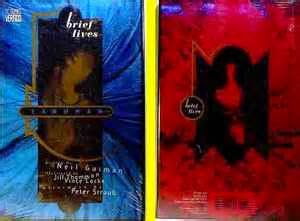
Regular readers might remember that recently I have:
reread Rick Veitch's (sequel to Alan Moore's) Swamp Thing;
been reading for the first time SM Stirling's Conquistador;
been enjoying these texts while also spotting any connections with the works of Poul Anderson.
Our
theme for today is references to Superman. In a work of fiction, any
reference to Supes implies either that he is a real guy out there
somewhere or that the fictional characters share with their readers a
popular culture in which this now mythical figure has become a permanent
fixture. Veitch gives us the first; the others the second.
Veitch
Swampy
goes to Metropolis to kill Lex Luthor who is protected both by his own
security system and by Superman. Veitch, like Moore and Gaiman, applies a
new insight to an over-familiar character.
Lois Lane: Clark?...Why is it when I'm talking to you, you always seem to be listening to something else?
Lois Lane: There you go again! I start talking and you stare off into space!
Clark Kent: Huh? Oh, uh...Just enjoying the view, Lois. You can see the whole city from up here.
Lois Lane: Yoo hoo! Earth to Clark. Come in, Clark!
-Rick Veitch, Swamp Thing: Infernal Triangles (New York, 2006), pp. 56, 58, 61.
Anderson
See here.
Stirling
"'Brother,
with the amount of money RM and M had to throw around, you could bribe
Superman'...'Ten million dollars,' the Man says. 'No, no, I am
Superman!' Then it's thirty million. 'No, no, I stand for Truth, Justice
and the American Way!' So then it's fifty million, and Superman comes
back: 'I'll kill anyone you want!...'"
-SM Stirling, Conquistador (New York, 2004), p. 298.
Of
course, the real (?) Superman is incorruptible. (In one version,
Luthor, formerly the most powerful man in Metropolis, tries but fails to
buy Supes as soon as the latter comes on the scene.) But Stirling's
character is making a point. Rolfe Mining and Minerals is one of many
front organizations for the Commonwealth of New Virginia which has been
secretly exploiting another Earth for decades. By any ordinary
standards, their funds are unlimited and "Rich enough to bribe even
Superman" is a powerful way to say this.
Showing posts with label Poul Anderson. Show all posts
Saturday, 4 July 2015
Saturday, 23 May 2015
Watchmen
(Far out. One image gives us the cover of my edition of Watchmen and the Awesome Mage himself.)
I am rereading Alan Moore's Watchmen so I need an angle to discuss it on the Poul Anderson Appreciation blog. Easy. It is all in the alternative histories.
Poul Anderson gives us alternative histories in which:
the Carolingian myths were true;
William Shakespeare was not the Great Dramatist but the Great Historian;
technology was based not on science but on magic.
And Alan Moore gives us alternative histories in which:
when superhero comics inspired real life superheroes, comic books turned instead to pirates and, after the New York incident, to horror;
Superman and Captain Marvel were comic book characters but Mick Anglo's Marvelman was a parareality program and Moore's revived Marvelman was the real thing.
Absolutely Mind-blowing.
I am rereading Alan Moore's Watchmen so I need an angle to discuss it on the Poul Anderson Appreciation blog. Easy. It is all in the alternative histories.
Poul Anderson gives us alternative histories in which:
the Carolingian myths were true;
William Shakespeare was not the Great Dramatist but the Great Historian;
technology was based not on science but on magic.
And Alan Moore gives us alternative histories in which:
when superhero comics inspired real life superheroes, comic books turned instead to pirates and, after the New York incident, to horror;
Superman and Captain Marvel were comic book characters but Mick Anglo's Marvelman was a parareality program and Moore's revived Marvelman was the real thing.
Absolutely Mind-blowing.
Monday, 18 May 2015
Changing Gods
Last night, for a change from Latin verse or American English prose, I reread parts of the graphic work, The Ultimates by
Mark Millar and Bryan Hitch, a superior version of the Marvel Comics
superhero team, the Avengers. Of course, I found a parallel with Poul
Anderson: the Ultimates include Thor.
However, this is a New Age Thor who defends anti-war demonstrators against the police and calls the US a new Roman Empire! The reference to the Roman Empire is a second parallel. But is the Ultimates Thor inauthentic? He is certainly un-Eddaic but, as I pointed out here, our gods have grown up with us. Poul Anderson, of course, shows us this process in "Star of the Sea."
Saturday, 14 March 2015
Worlds And Words
I copied this post from Poul Anderson Appreciation because it mentions Miracleman and Smallville:
SM Stirling, "Shikari in Galveston" IN Worlds That Weren't (New York, 2003), pp. 63-148.
Science fiction writers show words changing their meanings in the future. In Poul Anderson's There Will Be Time, Jack Havig, time traveling to his future, meets a young woman who, when asked what she does with her time, replies that she jokes a lot. An amateur comedienne? However, when she and he share a picnic with no one else present, she announces that she had figured they could joke after eating but why not before and after?
(15 Mar: Also relevant is Anderson's "A Tragedy of Errors.")
In Neil Gaiman's sequel to Alan Moore's Miracleman, "London" means an event as "Hiroshima" does to us and "Kidding" has become a swear word because of what the Kid did in London. (Alan Moore had asked, "What would someone with Superman's strength and speed but not his scruples do?" He then answered this question with extremely detailed instructions to a comic strip artist.)
In SM Stirling's "Shikari in Galveston," a Bengali trader surprises us by telling Eric King that the local savages "'...are a clean people...'" (p. 80) Clean? King has just complained of sweat, squalor, smoke, sewage and stink. However, the trader's use of the word "clean" does not refer to hygiene. He spells it out:
"'From the time of the Fall.'" (ibid.)
King understands:
"King nodded...that was one of the fundamental distinctions in the modern world, between those whose ancestors had eaten men in the terrible years after the hammer from the skies struck, and those who hadn't. The only more fundamental one was between those who still did, and the rest of humanity." (ibid.)
And I am certain that the use of the word "clean" would be extended in precisely this way in those circumstances.
Tomorrow there will be a family outing for Mothers' Day (we have two mothers in the household) so maybe not much time for posting. Before turning in this evening, I have had to stop reading Stieg Larsson in order to post and must now stop posting in order to watch Smallville. Retirement, as expected, is an endless choice between enjoyable activities.
SM Stirling, "Shikari in Galveston" IN Worlds That Weren't (New York, 2003), pp. 63-148.
Science fiction writers show words changing their meanings in the future. In Poul Anderson's There Will Be Time, Jack Havig, time traveling to his future, meets a young woman who, when asked what she does with her time, replies that she jokes a lot. An amateur comedienne? However, when she and he share a picnic with no one else present, she announces that she had figured they could joke after eating but why not before and after?
(15 Mar: Also relevant is Anderson's "A Tragedy of Errors.")
In Neil Gaiman's sequel to Alan Moore's Miracleman, "London" means an event as "Hiroshima" does to us and "Kidding" has become a swear word because of what the Kid did in London. (Alan Moore had asked, "What would someone with Superman's strength and speed but not his scruples do?" He then answered this question with extremely detailed instructions to a comic strip artist.)
In SM Stirling's "Shikari in Galveston," a Bengali trader surprises us by telling Eric King that the local savages "'...are a clean people...'" (p. 80) Clean? King has just complained of sweat, squalor, smoke, sewage and stink. However, the trader's use of the word "clean" does not refer to hygiene. He spells it out:
"'From the time of the Fall.'" (ibid.)
King understands:
"King nodded...that was one of the fundamental distinctions in the modern world, between those whose ancestors had eaten men in the terrible years after the hammer from the skies struck, and those who hadn't. The only more fundamental one was between those who still did, and the rest of humanity." (ibid.)
And I am certain that the use of the word "clean" would be extended in precisely this way in those circumstances.
Tomorrow there will be a family outing for Mothers' Day (we have two mothers in the household) so maybe not much time for posting. Before turning in this evening, I have had to stop reading Stieg Larsson in order to post and must now stop posting in order to watch Smallville. Retirement, as expected, is an endless choice between enjoyable activities.
Friday, 20 February 2015
Meteors
Copied from Poul Anderson Appreciation:
(This is another post that begins somewhere else, then returns to Poul Anderson Appreciation.)
Superman began publication as an adult character in 1938 so his spaceship must have come to Earth about 1918, although no one usually associates him with that period. However, in the Smallville TV series, his spaceship arrived in 1989 so why was it not detected as an incoming missile by US radar defense systems? Because this time the small space capsule arrived in a large Kryptonite meteor shower. Did the ship's drive field carry the meteors through hyperspace?
In Poul Anderson's The Star Fox (London, 1968), the space privateers use "...a giant meteorite or small asteroid..." (p. 148) to conceal the descent of a spaceship onto the surface of the planet New Europe. Because of the speed of descent, air impact would destroy the ship:
"Unless she followed exactly behind the meteorite, using its mass for a bumper and heat shield, its flaming tail for a cloak." (p. 149)
Gunnar Heim must steer the ship through its "...narrow slot of partial vacuum..." (ibid), watching the external incandescence and internal instruments, guided by intuition and an unreeling computation of where he ought to be at each moment. This sounds like other dangerous space passages in Anderson's works:
Dominic Flandry around a pulsar;
Nicholas van Rijn around an extinct supernova;
the Tau Zero ship around a new monobloc.
Before this some of Heim's men made an "...epic..." (p. 148) trip around New Europe's moon but it is not stated exactly why. Did they detach the mass that became the meteorite?
(This is another post that begins somewhere else, then returns to Poul Anderson Appreciation.)
Superman began publication as an adult character in 1938 so his spaceship must have come to Earth about 1918, although no one usually associates him with that period. However, in the Smallville TV series, his spaceship arrived in 1989 so why was it not detected as an incoming missile by US radar defense systems? Because this time the small space capsule arrived in a large Kryptonite meteor shower. Did the ship's drive field carry the meteors through hyperspace?
In Poul Anderson's The Star Fox (London, 1968), the space privateers use "...a giant meteorite or small asteroid..." (p. 148) to conceal the descent of a spaceship onto the surface of the planet New Europe. Because of the speed of descent, air impact would destroy the ship:
"Unless she followed exactly behind the meteorite, using its mass for a bumper and heat shield, its flaming tail for a cloak." (p. 149)
Gunnar Heim must steer the ship through its "...narrow slot of partial vacuum..." (ibid), watching the external incandescence and internal instruments, guided by intuition and an unreeling computation of where he ought to be at each moment. This sounds like other dangerous space passages in Anderson's works:
Dominic Flandry around a pulsar;
Nicholas van Rijn around an extinct supernova;
the Tau Zero ship around a new monobloc.
Before this some of Heim's men made an "...epic..." (p. 148) trip around New Europe's moon but it is not stated exactly why. Did they detach the mass that became the meteorite?
Friday, 3 October 2014
Some English History
Copied from Poul Anderson Appreciation today.
Rereading Poul Anderson's works has slowed down because I have:
worked my way through most of the Technic History;
been reading Peter O'Donnell's Modesty Blaise for the first time;
begun rereading Bryan Talbot's Alice In Sunderland.
Since I have met Bryan Talbot a few times and saw Poul Anderson at a couple of World SF Cons, that leaves Peter O'Donnell as the only one of these three writers with whom I have had no personal or visual contact.
Talbot's Alice... summarizes a lot of English history and thus covers some familiar Andersonian territory. Talbot mentions Romans, Vikings and Normans but, so far, has skipped over Harald Hardrada. He reminds us that it was the Venerable Bede, the father of English history, who invented the BC/AD calender.
Does anyone out there know which Poul Anderson book this cover illustration is for?
Rereading Poul Anderson's works has slowed down because I have:
worked my way through most of the Technic History;
been reading Peter O'Donnell's Modesty Blaise for the first time;
begun rereading Bryan Talbot's Alice In Sunderland.
Since I have met Bryan Talbot a few times and saw Poul Anderson at a couple of World SF Cons, that leaves Peter O'Donnell as the only one of these three writers with whom I have had no personal or visual contact.
Talbot's Alice... summarizes a lot of English history and thus covers some familiar Andersonian territory. Talbot mentions Romans, Vikings and Normans but, so far, has skipped over Harald Hardrada. He reminds us that it was the Venerable Bede, the father of English history, who invented the BC/AD calender.
Does anyone out there know which Poul Anderson book this cover illustration is for?
Friday, 27 December 2013
Eyes And Mouths
I stopped reading Poul Anderson's prose fiction so that I could reread and post about Neil Gaiman's graphic fiction. However, my daughter has just given me Iain M Banks' first three Culture novels so I have started to read those. They are fitting subject matter for the Science Fiction blog.
However, comics fans will be interested to learn that the central character of the first Culture novel has a nightmare that is already well known to readers of Gaiman's The Sandman series:
"He slept fitfully; his dreams woke him.
"Ghosts chased him in echoing docks and silent, deserted ships and, when he turned to face them, their eyes were always waiting, like targets, like mouths; and the mouths swallowed him, so that he fell into the eye's black mouth..."
- Banks, Consider Philebas (London, 2013), p. 327.
Presents also included Smallville, Season 2, which will provide subject matter for Comics Appreciation.
However, comics fans will be interested to learn that the central character of the first Culture novel has a nightmare that is already well known to readers of Gaiman's The Sandman series:
"He slept fitfully; his dreams woke him.
"Ghosts chased him in echoing docks and silent, deserted ships and, when he turned to face them, their eyes were always waiting, like targets, like mouths; and the mouths swallowed him, so that he fell into the eye's black mouth..."
- Banks, Consider Philebas (London, 2013), p. 327.
Presents also included Smallville, Season 2, which will provide subject matter for Comics Appreciation.
Thursday, 19 December 2013
Fairy Gold
Yet another parallel between Neil Gaiman and Poul Anderson is fairy gold. In Anderson's short story, "Fairy Gold," fairy money is used in several transactions during a single night but, in the morning:
"In her left hand, behind his shoulder, she gripped the fairy gold. The sun came over a roof-top, and smote. Suddenly she held nothing. A few dead leaves blew away upon the dawn breeze, with a sound like dry laughter."
- The Armies Of Elfland (New York, 1992), p. 141.
In Gaiman's "A Midsummer Night's Dream," the first performance of A Midsummer Night's Dream is to Auberon's court. When, during the interval, Richard Burbage mentions payment, Auberon is surprised:
"Gold. You ask Auberon of the Fay for gold...? Then you must have your gold, actor."
- Dream Country (New York, 1995), p. 77.
And a bag full of coins changes hands but, in the morning:
Shakespeare: A pouch of yellow leaves.
Burbage: But...we were cheated!
Shakespeare: No, for we were paid full well. Which other troupe has played to such an audience? (p. 86)
"In her left hand, behind his shoulder, she gripped the fairy gold. The sun came over a roof-top, and smote. Suddenly she held nothing. A few dead leaves blew away upon the dawn breeze, with a sound like dry laughter."
- The Armies Of Elfland (New York, 1992), p. 141.
In Gaiman's "A Midsummer Night's Dream," the first performance of A Midsummer Night's Dream is to Auberon's court. When, during the interval, Richard Burbage mentions payment, Auberon is surprised:
"Gold. You ask Auberon of the Fay for gold...? Then you must have your gold, actor."
- Dream Country (New York, 1995), p. 77.
And a bag full of coins changes hands but, in the morning:
Shakespeare: A pouch of yellow leaves.
Burbage: But...we were cheated!
Shakespeare: No, for we were paid full well. Which other troupe has played to such an audience? (p. 86)
Saturday, 14 December 2013
Temple Prostitution
Another parallel between the works of Poul Anderson and Neil Gaiman is temple prostitution.
In Anderson's "Ivory and Apes and Peacocks", Manse Everard of the Time Patrol, gathering intelligence in King Hiram's Tyre, gains the gratitude of Sarai, a well-connected member of the palace staff, by freeing her in the temple.
In Gaiman's The Sandman: Brief Lives (New York, 1994), an exotic dancer called Nancy, with a Masters in Women's Studies, explains to fellow dancers, Tiffany and Ishtar:
"The Near East, right? Two, three thousand years ago, one of the love goddesses...Astarte, maybe [Everard's is Asherat]. Every woman in that country had to go to the temple, once in her life. All the women waited in the temple courtyard. Each one had to wait there until a stranger offered her a coin. Whoever he was, she had to go with him, and they'd make out. I think there were rooms in the temple to do it in [Everard and Sarai had to go elsewhere]...The historian made some sexist crack about the women. Because they couldn't leave until someone made love to them. He said the good-looking ones got off early, but the rougher-looking ones sometimes waited in the temple courtyard for months. But that's history for you, all written by men [and that had been Sarai's fate]." (Chapter 5, pp. 11-12)
Nancy and the others then wonder what happens to goddesses Who are no longer worshiped. Do some become exotic dancers? Because The Sandman is a fantasy, we soon learn that the dancer Ishtar is indeed the goddess, a revelation that could very readily have fitted into one of Poul Anderson's fantasies.
In Anderson's "Ivory and Apes and Peacocks", Manse Everard of the Time Patrol, gathering intelligence in King Hiram's Tyre, gains the gratitude of Sarai, a well-connected member of the palace staff, by freeing her in the temple.
In Gaiman's The Sandman: Brief Lives (New York, 1994), an exotic dancer called Nancy, with a Masters in Women's Studies, explains to fellow dancers, Tiffany and Ishtar:
"The Near East, right? Two, three thousand years ago, one of the love goddesses...Astarte, maybe [Everard's is Asherat]. Every woman in that country had to go to the temple, once in her life. All the women waited in the temple courtyard. Each one had to wait there until a stranger offered her a coin. Whoever he was, she had to go with him, and they'd make out. I think there were rooms in the temple to do it in [Everard and Sarai had to go elsewhere]...The historian made some sexist crack about the women. Because they couldn't leave until someone made love to them. He said the good-looking ones got off early, but the rougher-looking ones sometimes waited in the temple courtyard for months. But that's history for you, all written by men [and that had been Sarai's fate]." (Chapter 5, pp. 11-12)
Nancy and the others then wonder what happens to goddesses Who are no longer worshiped. Do some become exotic dancers? Because The Sandman is a fantasy, we soon learn that the dancer Ishtar is indeed the goddess, a revelation that could very readily have fitted into one of Poul Anderson's fantasies.
Tuesday, 28 May 2013
Superhero Parallels
Two minor comparisons between the DC Comics Universe and Poul Anderson's History of Technic Civilization -
(i) Members of the superhero team, the Green Lantern Corps, wear "power rings" that bestow super powers, including flight. One Corps member resembled a squirrel.
Members of the trader team sometimes fly using personal gravity harnesses. One team member resembles a squirrel.
(ii) Thanagar is inhabited both by winged, feathered, avian-headed humanoids and by fully humanoid beings whose policemen fly with artificial wings and belts of anti-gravity metal and wear hawk-like helmets. Two Thanagarian police officers came to Earth as the superheroes, Hawkman and Hawkwoman.
Avalon is colonized by winged, feathered Ythrians and by human beings some of whom fly with gravbelts.
Imperial Thanagar joined an Alien Alliance attack against Terrestrial superheroes whereas Avalon successfully resisted annexation by Imperial Terra.
Comments:
Here the resemblances end. Graphic fiction can be as rich and dense as prose fiction can be but usually it is not because of its monthly publishing schedule.
Anderson's characters do not fight crime but earn a living and, when necessary, keep the peace.
(i) Members of the superhero team, the Green Lantern Corps, wear "power rings" that bestow super powers, including flight. One Corps member resembled a squirrel.
Members of the trader team sometimes fly using personal gravity harnesses. One team member resembles a squirrel.
(ii) Thanagar is inhabited both by winged, feathered, avian-headed humanoids and by fully humanoid beings whose policemen fly with artificial wings and belts of anti-gravity metal and wear hawk-like helmets. Two Thanagarian police officers came to Earth as the superheroes, Hawkman and Hawkwoman.
Avalon is colonized by winged, feathered Ythrians and by human beings some of whom fly with gravbelts.
Imperial Thanagar joined an Alien Alliance attack against Terrestrial superheroes whereas Avalon successfully resisted annexation by Imperial Terra.
Comments:
Here the resemblances end. Graphic fiction can be as rich and dense as prose fiction can be but usually it is not because of its monthly publishing schedule.
Anderson's characters do not fight crime but earn a living and, when necessary, keep the peace.
Saturday, 23 February 2013
A Diversion
From the Poul Anderson Appreciation blog last month:
For months, I have been reading, mainly rereading, Poul Anderson's novels and posting about them while reading them. This means that I read the books more slowly than usual but also that I get more out of them. It also means that I read less other stuff. However, I must occasionally read something else.
Having received the Smallville TV series First Season DVD's as a present, I have been watching the early episodes and have also started to reread a Smallville novel, Dragon by Alan Grant.
Grant's description of a small spacecraft surrounded by a meteor swarm entering the Solar System and falling towards Earth while the Luthors and Kents go about their business in Smallville, Kansas, is worthy of Anderson. Many different authors have written Superman. Isobel Allende wrote a Zorro novel - called Zorro. Poul Anderson contributed to many other authors' sf series. (In fact, "Anderson in Asimov's, Niven's and others' universes" could be a topic in itself.)
What if Anderson had written a Superman novel, scientifically rationalising all the absurdities of a humanoid alien with impossible powers and presenting the character as interacting not with even greater absurdities but with the real world of economic crisis, climate change and US military interventions - Clark Kent reporting from Iraq and investigating Lexcorp? The twentieth century myth of Superman deserves such treatment in the three related media of prose fiction, graphic fiction and film. Graphic story-telling is intermediate between prose and film. Each of the three can do what the others can't. Poul Anderson would have been able to write a memorable novel.
For months, I have been reading, mainly rereading, Poul Anderson's novels and posting about them while reading them. This means that I read the books more slowly than usual but also that I get more out of them. It also means that I read less other stuff. However, I must occasionally read something else.
Having received the Smallville TV series First Season DVD's as a present, I have been watching the early episodes and have also started to reread a Smallville novel, Dragon by Alan Grant.
Grant's description of a small spacecraft surrounded by a meteor swarm entering the Solar System and falling towards Earth while the Luthors and Kents go about their business in Smallville, Kansas, is worthy of Anderson. Many different authors have written Superman. Isobel Allende wrote a Zorro novel - called Zorro. Poul Anderson contributed to many other authors' sf series. (In fact, "Anderson in Asimov's, Niven's and others' universes" could be a topic in itself.)
What if Anderson had written a Superman novel, scientifically rationalising all the absurdities of a humanoid alien with impossible powers and presenting the character as interacting not with even greater absurdities but with the real world of economic crisis, climate change and US military interventions - Clark Kent reporting from Iraq and investigating Lexcorp? The twentieth century myth of Superman deserves such treatment in the three related media of prose fiction, graphic fiction and film. Graphic story-telling is intermediate between prose and film. Each of the three can do what the others can't. Poul Anderson would have been able to write a memorable novel.
Thursday, 7 February 2013
Verbals And Visuals
Rereading a Poul Anderson science fiction novel late at night, I suddenly wanted visual as well as verbal input so I switched to rereading The Boys Vol 4, We Gotta Go Now, by Garth Ennis.
A novelist describes a scene to his readers so that we can visualise it whereas a comics script writer describes a scene to the artist so that we can see it. The same fictive process, the transmission of an image from author to reader, is mediated differently.
Occasionally, the writer is also the artist. In that case, he does not merely relate but realises the visuals of the scene or event to be communicated. In either case, whether there is a writer-artist team or a solo writer-artist, the visualising has been done for us but it is down to us to notice the details in each panel, not just to follow the narrative from panel to panel by reading speech balloons and captions. In a purely verbal medium, our attention moves continuously along the lines of the text and from page to page whereas, with graphic fiction, we need to pause in order to look as well as to read.
Returning to the novel the following day, I immediately found one of Anderson's rich descriptive passages. Two of the characters:
"...turned north into Riverside, a road cut from the left bank of the Jayin. On their right, trees screened them from view of town, a long row of deep-rooted swordleaf, preserved amidst this terrestrialized ecology to be a windbreak when tornados whirled out of the west. Opposite, the stream flowed broad, murmurous, evening ablaze upon it...On the farther shore, native pastureland rolled into blue remoteness...a peacefulness that Sparling wished Constable could have painted...Westward under a sinking Bel, a few clouds glowed orange. Elsewhere the sky stood unutterably clear." (Fire Time, London, 1977, pp. 68-69)
There is a lot more but I can't quote indefinitely. Appropriately, for the comparison that I am making between prose and graphics, one of the characters wishes for a pictorial representation.
In The Boys, we get:
beautiful pictures of Hughie and Annie naked in a field or in bed together;
a distant horizon seen through the wall-sized window of a superhero team's hovering headquarters;
an American corporate executive talking importantly into a mobile phone while driving around a golf course;
close-ups of our characters' wistful glances, enigmatic smiles, horrified stares etc;
a gallery of covers by big name comic book artists, including Dave Gibbons of Watchmen.
Far out. Vive la difference.
Friday, 28 December 2012
Rereading
I endlessly reread The Time Patrol by Poul Anderson and The Sandman by Neil Gaiman. Both refer to ancient temple prostitution.
I am rereading The Sandman between Christmas and New Year before, I expect, reading some newly acquired Anderson novels and commenting on them.
When rereading, it is good to notice details not remembered from previous readings, like:
the alder man's "death traps" are like rope spider's webs in trees and the fact that one is torn tells him that a big death approaches from the south;
Delerium blows soap bubbles of different shapes;
Morpheus addresses the dancer as "Belili" and "Astarte" and each time she corrects him to "Ishtar" (she is really the Goddess);
"Tiffany Watches" is a pun.
Tuesday, 27 November 2012
Aquamen
Pantheons include sea gods like Neptune and Lir. Superhero teams include aquatic superheroes like Aquaman or the Submariner. After the continuity-changing Crisis On Infinite Earths, Editor and Writer Roy Thomas retconned Neptune Perkins and Tsunami to replace the Golden Age Aquaman. Such marine superheroes are fascinating but would be even more so if we were told more about their physiology and psychology and about how they function at different depths.
Once, trying to touch the bottom of an artificial lake, I swam down to a level that was suddenly dark and cold with a pain in the ears so I re-ascended as fast as possible. Our heroes would be comfortable at that depth and would be able to descend further.
Poul Anderson describes this process in The Merman's Children (London, 1981), pp. 53-54. In mid-Atlantic:
the halflings wave to wind and sun, then submerge;
for their first breath of sea, they blow out, then widen lips and chest;
water enters and permeates their bodies, activating the merfolk metabolism;
subtle humours decompose water to extract oxygen;
salt is sieved from tissues;
interior furnaces counteract the cold although it is still felt (merfolk are few because they need more food at sea than men do on land);
as they descend, light decreases, then departs;
there is complete silence;
the underwater dialect of the mer-tongue comprises hums, clicks and smacks;
each halfling has an undersea "lanthorn"/lantern strapped to his left forearm (not quite Green Lanterns);
they regularly work chest and stomach muscles to equalise pressure inside and out but still feel the weight of the water;
their leader feels that he nears bottom before uncovering his lantern;
he smells rank flesh and hears or senses the movement of the kraken's gills;
with the lantern, he sees the kraken.
We need this kind of description and more in superhero comics.
Once, trying to touch the bottom of an artificial lake, I swam down to a level that was suddenly dark and cold with a pain in the ears so I re-ascended as fast as possible. Our heroes would be comfortable at that depth and would be able to descend further.
Poul Anderson describes this process in The Merman's Children (London, 1981), pp. 53-54. In mid-Atlantic:
the halflings wave to wind and sun, then submerge;
for their first breath of sea, they blow out, then widen lips and chest;
water enters and permeates their bodies, activating the merfolk metabolism;
subtle humours decompose water to extract oxygen;
salt is sieved from tissues;
interior furnaces counteract the cold although it is still felt (merfolk are few because they need more food at sea than men do on land);
as they descend, light decreases, then departs;
there is complete silence;
the underwater dialect of the mer-tongue comprises hums, clicks and smacks;
each halfling has an undersea "lanthorn"/lantern strapped to his left forearm (not quite Green Lanterns);
they regularly work chest and stomach muscles to equalise pressure inside and out but still feel the weight of the water;
their leader feels that he nears bottom before uncovering his lantern;
he smells rank flesh and hears or senses the movement of the kraken's gills;
with the lantern, he sees the kraken.
We need this kind of description and more in superhero comics.
Wednesday, 19 September 2012
The Graphic Poul Anderson II
There
are two further stages in Poul Anderson's History of Technic
Civilisation where it would make sense for a graphic adaptation to
involve simultaneous serialisation of different sections of the History.
Maybe the first part of "The Adventures of Dominic Flandry," corresponding to the three "Young Flandry" novels, could be published in parallel with "League and Empire," the latter showing the Avalon colony and the early Empire. In this way, the reader of both series would simultaneously see both Flandry defending the Terran Empire and the events that had led to the founding and earlier history of that same Empire.
Even more appropriately, after "young Flandry" has defeated the McCormac Rebellion, "The Adventures..." would continue to depict his career while a parallel series entitled simply "The Terran Empire" would adapt the plots of the short story and the novel that are contemporaneous with Flandry but that do not feature him as a character.
In this way, the reader has the sense of learning about approximately simultaneous events in different parts of a single fictitional universe. Such a universe could be indefinitely enlarged by employing additional script writers, pencillers, inkers, colourists, letterers and editors but that is not the present proposal. The idea would be merely to adapt Poul Anderson's existing works into this visual medium that differs alike from prose and film.
Both Isaac Asimov's Robots/Galactic Empire future history and the Man-Kzin Wars period of Larry Niven's Known Space future history have been expanded by the incorporation of newly written works by other authors, including in both cases Anderson, but I would expect merely a dilution of Anderson's Technic History if it were to be enlarged in this way. Certainly, I would continue to regard Anderson's works as complete in themselves and would not accept that any newly written sequels or continuations were legitimately parts of the same series.
In fact, I do not accept the validity even of Robert Heinlein's own later additions to his Future History.
Maybe the first part of "The Adventures of Dominic Flandry," corresponding to the three "Young Flandry" novels, could be published in parallel with "League and Empire," the latter showing the Avalon colony and the early Empire. In this way, the reader of both series would simultaneously see both Flandry defending the Terran Empire and the events that had led to the founding and earlier history of that same Empire.
Even more appropriately, after "young Flandry" has defeated the McCormac Rebellion, "The Adventures..." would continue to depict his career while a parallel series entitled simply "The Terran Empire" would adapt the plots of the short story and the novel that are contemporaneous with Flandry but that do not feature him as a character.
In this way, the reader has the sense of learning about approximately simultaneous events in different parts of a single fictitional universe. Such a universe could be indefinitely enlarged by employing additional script writers, pencillers, inkers, colourists, letterers and editors but that is not the present proposal. The idea would be merely to adapt Poul Anderson's existing works into this visual medium that differs alike from prose and film.
Both Isaac Asimov's Robots/Galactic Empire future history and the Man-Kzin Wars period of Larry Niven's Known Space future history have been expanded by the incorporation of newly written works by other authors, including in both cases Anderson, but I would expect merely a dilution of Anderson's Technic History if it were to be enlarged in this way. Certainly, I would continue to regard Anderson's works as complete in themselves and would not accept that any newly written sequels or continuations were legitimately parts of the same series.
In fact, I do not accept the validity even of Robert Heinlein's own later additions to his Future History.
The Graphic Poul Anderson?
I
am imagining graphic adaptations of Poul Anderson's works. A prose
novel can be adapted as a graphic novel but how about this in a monthly
or bimonthly comic book format?
The Poul Anderson Fantasy Line would simultaneously serialise:
The Adventures of Holger Danske (Three Hearts And Three Lions);
The Adventures of a Witch and a Werewolf (the "Operation..." series);
The Adventures of Prince Rupert of the Rhine (A Midsummer Tempest);
"Other Universes", which would show:
an alternative timeline ("The House of Sorrows");
travel between timelines ("Eutopia");
the inn between timelines (the two Old Phoenix stories);
Danske, Valeria Matuchek and Rupert meeting in the Old Phoenix (A Midsummer Tempest, xi and xii);
Valeria addressing a larger gathering in the Old Phoenix (A Midsummer Tempest, Epilogue).
One installment of "Prince Rupert" would end with Rupert and Will about to enter the Old Phoenix. The following installment would begin after they have left it. The reader would be referred to the appropriate installment of "Other Universes".
The Poul Anderson Science Fiction Line would simultaneously serialise:
Before the League (pre-Polestochnic League stories);
The Polesotechnic League (stories contemporaneous with van Rijn, including the first two Falkayn stories and the first two Trader Team stories - van Rijn cameos in the first Trader Team story);
The Adventures of Nicholas van Rijn.
The third, fourth and fifth Trader Team stories, two of which are novels, also feature van Rijn so they would be crossovers. The short story, "Lodestar", easily divides into a Trader Team section which would be adapted in "The Polesotechnic League" and a van Rijn section, with him meeting the Team at the end, which would be adapted in "The Adventures..."
Graphic adaptations add visuals, thus are like a continuation of the book covers: van Rijn should look as he does on the cover of Baen Books The Van Rijn Method. Simultaneous serialisations offer the extra dimension of reading connected works concurrently instead of consecutively.
The Poul Anderson Fantasy Line would simultaneously serialise:
The Adventures of Holger Danske (Three Hearts And Three Lions);
The Adventures of a Witch and a Werewolf (the "Operation..." series);
The Adventures of Prince Rupert of the Rhine (A Midsummer Tempest);
"Other Universes", which would show:
an alternative timeline ("The House of Sorrows");
travel between timelines ("Eutopia");
the inn between timelines (the two Old Phoenix stories);
Danske, Valeria Matuchek and Rupert meeting in the Old Phoenix (A Midsummer Tempest, xi and xii);
Valeria addressing a larger gathering in the Old Phoenix (A Midsummer Tempest, Epilogue).
One installment of "Prince Rupert" would end with Rupert and Will about to enter the Old Phoenix. The following installment would begin after they have left it. The reader would be referred to the appropriate installment of "Other Universes".
The Poul Anderson Science Fiction Line would simultaneously serialise:
Before the League (pre-Polestochnic League stories);
The Polesotechnic League (stories contemporaneous with van Rijn, including the first two Falkayn stories and the first two Trader Team stories - van Rijn cameos in the first Trader Team story);
The Adventures of Nicholas van Rijn.
The third, fourth and fifth Trader Team stories, two of which are novels, also feature van Rijn so they would be crossovers. The short story, "Lodestar", easily divides into a Trader Team section which would be adapted in "The Polesotechnic League" and a van Rijn section, with him meeting the Team at the end, which would be adapted in "The Adventures..."
Graphic adaptations add visuals, thus are like a continuation of the book covers: van Rijn should look as he does on the cover of Baen Books The Van Rijn Method. Simultaneous serialisations offer the extra dimension of reading connected works concurrently instead of consecutively.
Friday, 14 September 2012
Narratives And Their Conclusions
The
nature of a narrative is shown by the kind of climax or conclusion to
which it leads. I concurrently reread Poul Anderson's Matuchek/Old
Phoenix sequence and Neil Gaiman's The Sandman: Worlds' End (New York, 1994) because both series have an inter-cosmic inn.
These four Anderson novels each have a foregone conclusion: the triumph of good over evil. Three Hearts And Three Lions does not describe its climactic battle, just the hero setting off to it. Operation Luna ends with a battle against demons. In each individual skirmish, a good guy dispatches a demon until the demonic survivors flee. Hardly surprising. In Black Easter, James Blish simply reverses this conclusion: the demons win Armageddon.
Worlds' End tells different kinds of stories with a different kind of ending. The "handsome cabin boy" ends her story by saying that she will continue to masquerade as a boy as long as she can:
" '...for now - - you can call me Jim.' " (p. 90)
Brant Tucker narrates from the first word and we assume that he directly addresses the reader. To our surprise, on the last two pages, 161-162, he is seen to be addressing a bar maid in an otherwise empty bar. The conclusion is them saying, "Good night," and him walking away down a dark city street. We are left to reflect on their lives.
These four Anderson novels each have a foregone conclusion: the triumph of good over evil. Three Hearts And Three Lions does not describe its climactic battle, just the hero setting off to it. Operation Luna ends with a battle against demons. In each individual skirmish, a good guy dispatches a demon until the demonic survivors flee. Hardly surprising. In Black Easter, James Blish simply reverses this conclusion: the demons win Armageddon.
Worlds' End tells different kinds of stories with a different kind of ending. The "handsome cabin boy" ends her story by saying that she will continue to masquerade as a boy as long as she can:
" '...for now - - you can call me Jim.' " (p. 90)
Brant Tucker narrates from the first word and we assume that he directly addresses the reader. To our surprise, on the last two pages, 161-162, he is seen to be addressing a bar maid in an otherwise empty bar. The conclusion is them saying, "Good night," and him walking away down a dark city street. We are left to reflect on their lives.
Thursday, 13 September 2012
Between Worlds
When
a character moves between worlds, how does the author describe the
transition? Sometimes, the character imagines another world, then enters
it - and later wonders whether it was real - but usually the other
world is unequivocally real. I will mention only a few examples from the
works of three fantasy writers, CS Lewis, Poul Anderson and Neil
Gaiman.
Lewis' most famous entrance to another world is a wardrobe but there is a better example in a later book. The characters look at a painting of the ship the Dawn Treader until it seems that the waves are moving, then they fall into the sea and are rescued by the ship's crew. Lewis never explains how a painting of a contemporary Narnian ship came to hang in an English house.
The hero of Poul Anderson's Three Hearts And Three Lions, fighting Nazis on a Danish beach, finds himself in the Carolingian mythological universe. Later, mission accomplished in that universe, he returns to the Danish beach with no loss of time, like a returned ruler of Narnia.
In Anderson's A Midsummer Tempest (London, 1975), Puck tells Prince Rupert of the Rhine's companion, Will Fairweather:
"'...to speak of inns and such - My friend, if sorely pressed for shelter, think of this. There is a tavern known as the old Phoenix, which none may see nor enter who're not touched by magic in some way. It flits about, but maybe you can use his ring to find it, or even draw a door towards yourselves...'" (pp. 55-56) (Oberon and Titania have given Rupert a magic ring.)
Sure enough, the ring lights the way to the inn which appears before Rupert and Will although it remains invisible to their Puritan pursuers. A regular of the Old Phoenix tells us:
"Look for it anywhere, anytime, by day, by dusk, by night, up an ancient alley or in a forest where hunters whose eyes no spoor can escape nonetheless pass it by unseeing...you must be alert for its fleeting presence..." (Anderson, "House Rule" IN Anderson, Fantasy (New York, 1981), p. 9).
This regular finds it many times, once unbelievably on ship at sea, another time more reasonably on a country road after dark where he knows that:
"The inn might waver from sight at any instant." (Anderson, "Losers' Night" IN Anderson, All One Universe (New York, 1996), p. 107)
It sounds like Neil Gaiman's Inn of the Worlds' End:
"Up the lane aways is the Inn. You just have to be SURE it's there, though. If you AREN'T sure, then fizzlywinks, it's only goin to be fireflies and treeses" (Gaiman, Neil, The Sandman: Worlds' End (New York, 1994), p. 22.
One Worlds' End guest enters it in stages. Brant Tucker is driving to Chicago at night on the interstate. So far then he is travelling though not as yet between worlds. (However, his Earth is that of the DC Universe where anything not only can happen but routinely does happen.) Then:
he was very tired, so did he dream everything that followed?;
he didn't think it was weird when it started to snow in June;
a large, strange animal ran in front of the car (we see this because we are reading graphic fiction);
the car went off the road, across a field, down a hill and into an oak tree;
"Everything was dreamlike; everything felt unreal..." (p. 21);
Brant, carrying his unconscious co-driver, Charlene Mooney, could not find the road;
he wondered when the hallucinations began (p. 22);
he was directed to the Inn by an apparently disembodied voice (see above - the reader realises that the speaker is a hedgehog; regular readers recognize the speaking hedgehog from Gaiman's The Books of Magic);
Brant finds a country road;
at the end of the road, is a light;
first it is fireflies in a hedge, then it is the Inn.
I think that the transition between realities began with the apparent snow storm which, we learn, was a reality storm, stranding travellers from many realms in the Inn. A sailor's account is different:
"Y'see, there was a storm, come up out of nowhere at midnight - - we were swept onto the rocks where there shouldn't've been rocks neither, nohow." (p. 67)
Brant and the sailor then disagree about whether the date is June, 1993, or September, 1914.
And a Necropolitan says:
" 'A dark thunderstorm arose suddenly, and the brougham in which my companions and I were travelling was washed into a river.' " (p. 42)
Making an ordinary journey seems to be the beginning of the process.
The landlady explains:
"This place is the Inn at the end of all worlds. None of you were BROUGHT here. Each of you was travelling, and was caught in an unseasonable storm of some kind. You made your way here by luck, and took refuge and advantage of the hospitality offered. And you WILL leave here, when the storm is over." (p. 139)
However, Charlene is allowed to stay to work in the Inn and we see her there in a later series, The Furies by Mike Carey. The characters offer different theories about what causes a reality storm. A common feature of the Old Phoenix and the Worlds' End is the telling of stories and some of these stories offer other routes between worlds:
"...the silver road...glittered and glimmered away beyond a street market." (Gaiman, p. 29)
The man who sees the silver road works in an office in a modern city where gravestones can have "...letters from forgotten alphabets..." (p. 28). That odd touch, if taken literally, means that the modern city is certainly not on any Earth like ours. The narrator of this story asks:
"Is there any person in the world who does not dream? Who does not contain within them worlds unimagined?" (p. 28)
And that is where the other worlds are.
Lewis' most famous entrance to another world is a wardrobe but there is a better example in a later book. The characters look at a painting of the ship the Dawn Treader until it seems that the waves are moving, then they fall into the sea and are rescued by the ship's crew. Lewis never explains how a painting of a contemporary Narnian ship came to hang in an English house.
The hero of Poul Anderson's Three Hearts And Three Lions, fighting Nazis on a Danish beach, finds himself in the Carolingian mythological universe. Later, mission accomplished in that universe, he returns to the Danish beach with no loss of time, like a returned ruler of Narnia.
In Anderson's A Midsummer Tempest (London, 1975), Puck tells Prince Rupert of the Rhine's companion, Will Fairweather:
"'...to speak of inns and such - My friend, if sorely pressed for shelter, think of this. There is a tavern known as the old Phoenix, which none may see nor enter who're not touched by magic in some way. It flits about, but maybe you can use his ring to find it, or even draw a door towards yourselves...'" (pp. 55-56) (Oberon and Titania have given Rupert a magic ring.)
Sure enough, the ring lights the way to the inn which appears before Rupert and Will although it remains invisible to their Puritan pursuers. A regular of the Old Phoenix tells us:
"Look for it anywhere, anytime, by day, by dusk, by night, up an ancient alley or in a forest where hunters whose eyes no spoor can escape nonetheless pass it by unseeing...you must be alert for its fleeting presence..." (Anderson, "House Rule" IN Anderson, Fantasy (New York, 1981), p. 9).
This regular finds it many times, once unbelievably on ship at sea, another time more reasonably on a country road after dark where he knows that:
"The inn might waver from sight at any instant." (Anderson, "Losers' Night" IN Anderson, All One Universe (New York, 1996), p. 107)
It sounds like Neil Gaiman's Inn of the Worlds' End:
"Up the lane aways is the Inn. You just have to be SURE it's there, though. If you AREN'T sure, then fizzlywinks, it's only goin to be fireflies and treeses" (Gaiman, Neil, The Sandman: Worlds' End (New York, 1994), p. 22.
One Worlds' End guest enters it in stages. Brant Tucker is driving to Chicago at night on the interstate. So far then he is travelling though not as yet between worlds. (However, his Earth is that of the DC Universe where anything not only can happen but routinely does happen.) Then:
he was very tired, so did he dream everything that followed?;
he didn't think it was weird when it started to snow in June;
a large, strange animal ran in front of the car (we see this because we are reading graphic fiction);
the car went off the road, across a field, down a hill and into an oak tree;
"Everything was dreamlike; everything felt unreal..." (p. 21);
Brant, carrying his unconscious co-driver, Charlene Mooney, could not find the road;
he wondered when the hallucinations began (p. 22);
he was directed to the Inn by an apparently disembodied voice (see above - the reader realises that the speaker is a hedgehog; regular readers recognize the speaking hedgehog from Gaiman's The Books of Magic);
Brant finds a country road;
at the end of the road, is a light;
first it is fireflies in a hedge, then it is the Inn.
I think that the transition between realities began with the apparent snow storm which, we learn, was a reality storm, stranding travellers from many realms in the Inn. A sailor's account is different:
"Y'see, there was a storm, come up out of nowhere at midnight - - we were swept onto the rocks where there shouldn't've been rocks neither, nohow." (p. 67)
Brant and the sailor then disagree about whether the date is June, 1993, or September, 1914.
And a Necropolitan says:
" 'A dark thunderstorm arose suddenly, and the brougham in which my companions and I were travelling was washed into a river.' " (p. 42)
Making an ordinary journey seems to be the beginning of the process.
The landlady explains:
"This place is the Inn at the end of all worlds. None of you were BROUGHT here. Each of you was travelling, and was caught in an unseasonable storm of some kind. You made your way here by luck, and took refuge and advantage of the hospitality offered. And you WILL leave here, when the storm is over." (p. 139)
However, Charlene is allowed to stay to work in the Inn and we see her there in a later series, The Furies by Mike Carey. The characters offer different theories about what causes a reality storm. A common feature of the Old Phoenix and the Worlds' End is the telling of stories and some of these stories offer other routes between worlds:
"...the silver road...glittered and glimmered away beyond a street market." (Gaiman, p. 29)
The man who sees the silver road works in an office in a modern city where gravestones can have "...letters from forgotten alphabets..." (p. 28). That odd touch, if taken literally, means that the modern city is certainly not on any Earth like ours. The narrator of this story asks:
"Is there any person in the world who does not dream? Who does not contain within them worlds unimagined?" (p. 28)
And that is where the other worlds are.
Monday, 10 September 2012
Poul Anderson On Comics
Poul
Anderson wrote many works of fiction in prose but not in the visual
media of cinema or comic books. I have found three references to comics
in his novels.
(i) In There Will Be Time, time traveller Jack Havig comments that, despite Superman's telephone kiosk, the most convenient place in a modern city for a time traveller to disappear is a public toilet cubicle.
Greek dramatists sometimes commented on and corrected errors or implausibilities in the works of their predecessors. In this vein, in the first Superman film, Clark Kent, responding to an emergency, approaches a public telephone that is not even enclosed in a kiosk, realises that it would afford him no privacy for a costume change and instead uses a revolving door at super speed.
Thus, the film, like Anderson, commented on a familiar scene from earlier Superman comics.
(ii) In Operation Luna (New York, 2000), Steve Matuchek remarks:
"It's only comic-book heroes and their ilk who bounce directly from one brush with death to the next, wisecracking along the way. Real humans react to such things." (pp. 158-159)
Yes, real humans in real life and in realistically written novels or comics. There is nothing in the latter medium that obliges that it be written unrealistically.
(iii) Matuchek also speaks against vigilantism even if conducted in "...comic-book costumes" (p. 140). Right. Again, comics comment on earlier comics. Frank Miller's Batman is a vigilante wanted for assault, breaking and entering, child endangerment and, when the Joker's dead body has been found, murder. In Alan Moore's Watchmen, the public demonstrates and the police strike ("Badges, not Masks") until anonymous vigilantism is banned. In Garth Ennis' The Boys, superheroes are untrained and get a lot of people killed on 9/11. So the critique of comic book implausibilities is conducted in comics.
I would like to see high quality film and graphic adaptations of Anderson's works.
(i) In There Will Be Time, time traveller Jack Havig comments that, despite Superman's telephone kiosk, the most convenient place in a modern city for a time traveller to disappear is a public toilet cubicle.
Greek dramatists sometimes commented on and corrected errors or implausibilities in the works of their predecessors. In this vein, in the first Superman film, Clark Kent, responding to an emergency, approaches a public telephone that is not even enclosed in a kiosk, realises that it would afford him no privacy for a costume change and instead uses a revolving door at super speed.
Thus, the film, like Anderson, commented on a familiar scene from earlier Superman comics.
(ii) In Operation Luna (New York, 2000), Steve Matuchek remarks:
"It's only comic-book heroes and their ilk who bounce directly from one brush with death to the next, wisecracking along the way. Real humans react to such things." (pp. 158-159)
Yes, real humans in real life and in realistically written novels or comics. There is nothing in the latter medium that obliges that it be written unrealistically.
(iii) Matuchek also speaks against vigilantism even if conducted in "...comic-book costumes" (p. 140). Right. Again, comics comment on earlier comics. Frank Miller's Batman is a vigilante wanted for assault, breaking and entering, child endangerment and, when the Joker's dead body has been found, murder. In Alan Moore's Watchmen, the public demonstrates and the police strike ("Badges, not Masks") until anonymous vigilantism is banned. In Garth Ennis' The Boys, superheroes are untrained and get a lot of people killed on 9/11. So the critique of comic book implausibilities is conducted in comics.
I would like to see high quality film and graphic adaptations of Anderson's works.
Saturday, 8 September 2012
Imagining Alternative Histories
Characters in Poul Anderson's Operation Luna speculate -
If Einstein and Planck had not cooperated in 1901, then they might have developed distinct, mutually incompatible, theories of relativity and quantum mechanics instead of the single theory of rheatics.
Next, if Moseley had not released goetic forces by applying rheatic equations and thus degaussing cold iron, then:
fossil fuels and electricity would have been major energy sources;
transport would have been by horseless carriages or dirigibles;
astronomers would have analysed spectra, not spectres;
paranature would have remained Asleep, concealed;
witches and warlocks would have been cranks, not respected professionals;
werebeast DNA would not be understood;
those who had maintained magical traditions (Africans, Australians, Native Americans) would not have had their head start in practical goetics.
Imagining inhabitants of other timelines speculating about our timeline is a way of commenting on our timeline. I have found some comparable examples of this in graphic fiction -
A DC Comics supervillain, traveling between alternative Earths, claims to have found one where no one has gained any super powers. A colleague comments that that sounds unlikely.
Superman flying between parallel Earths passes briefly through the sky of Earth Prime, where superheroes are fictions. A man looking up shouts, "Look, up in the sky, it's...it's nothing!"
Alan Moore's Watchmen universe had real superheroes so their comics were about pirates, then horror, and a comics shop was called "Treasure Island," not "Forbidden Planet."
A Watchmen universe newspaper headline asks "RR for President?" A character asks, "Who wants a cowboy actor in the White House?" We realize that they mean Robert Redford.
One of the "Watchmen" comments that the US would have gone mad as a nation if it had lost in Vietnam.
Subscribe to:
Posts (Atom)